Case Examples

How SIJ cases can look completely different.

These case examples show how SIJ dysfunction can present through degeneration, prior lumbar fusion, failed pain procedures, hypermobility, and instability. The diagnosis often becomes clearer only when the history, examination, imaging, and response to injection are considered together.

Case 1.

Case 1 overview slide showing a 67-year-old patient with severe back pain

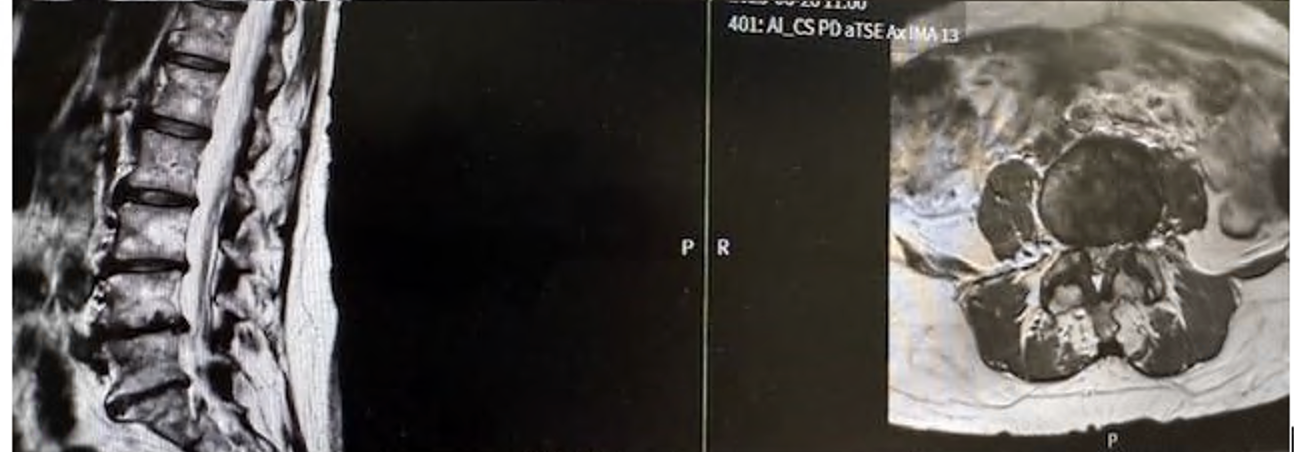
A 67-year-old patient from Melbourne presented with severe back pain rated 8/10 after failed physiotherapy, SIJ prolotherapy, and pain management.

  • SIJ injection gave only 24 hours of relief, but that response remained diagnostically important.
  • Beighton score: 7/9.
  • MRI showed severe discovertebral degeneration and facet arthritis.
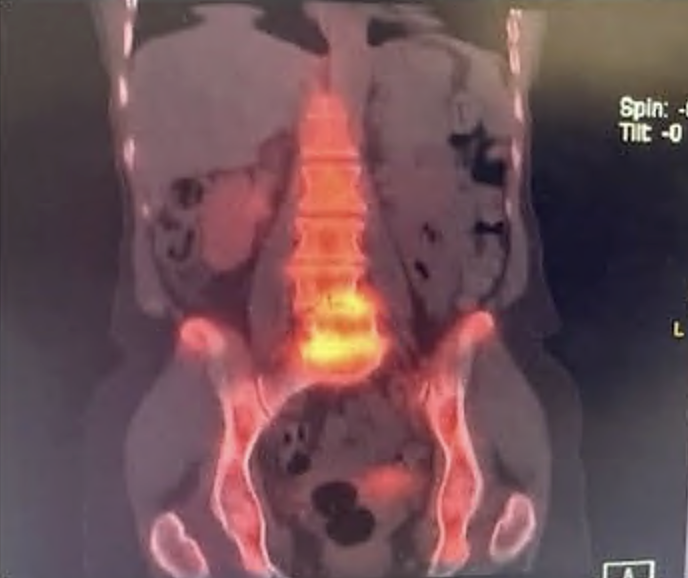
Case 1 Outcome.

Case 1 follow-up imaging and treatment outcome after endoscopic radiofrequency ablation

Treatment progressed to endoscopic radiofrequency ablation and neurectomy from L3 to S3.

  • The patient reported an 85% improvement.
  • Follow-up imaging continued to show marked degenerative change at L4/5 and L5/S1.
  • This case highlights how SIJ pain can coexist with major lumbar degeneration.

Case 2.

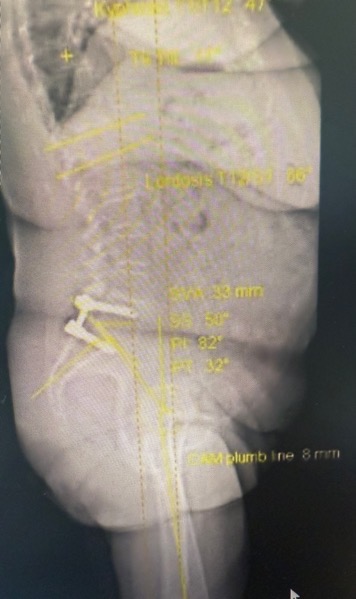
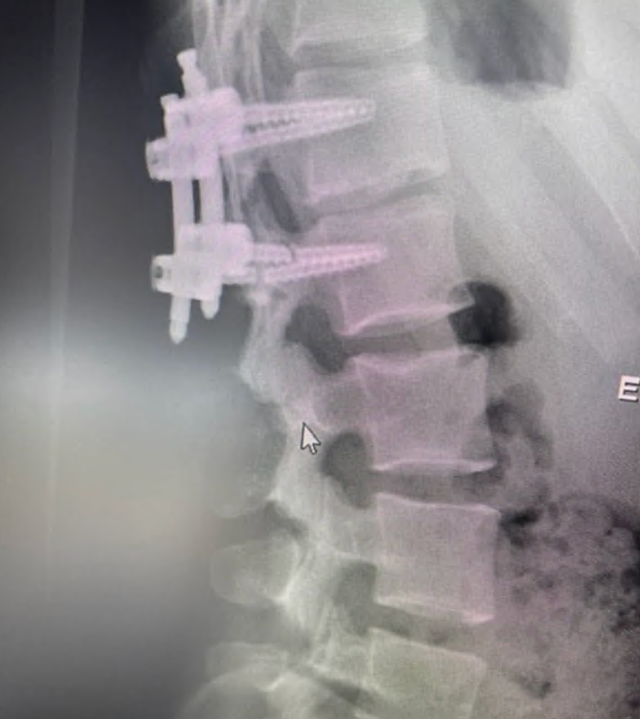
Standing radiograph from Case 2 showing prior lumbar fusion and spinopelvic alignment

A 75-year-old woman developed right-sided buttock, groin, and leg pain 33 years after an L5/S1 fusion.

  • MRI was limited by artifact.
  • CT did not show major compression.
  • She had excellent relief from an SIJ injection.

Case 2 Imaging.

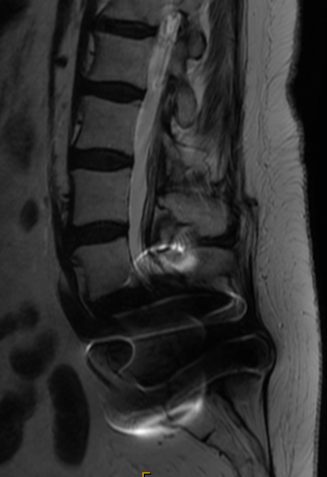
MRI for Case 2 demonstrating hardware artifact that complicates lumbar assessment

This case is a good example of a diagnostic dilemma after prior fusion, where imaging may not cleanly explain the pain pattern.

  • Prior spinal hardware can make MRI interpretation difficult.
  • CT may not reveal a compressive cause even when symptoms are significant.
  • The response to SIJ injection helped redirect the diagnostic pathway.

Case 3.

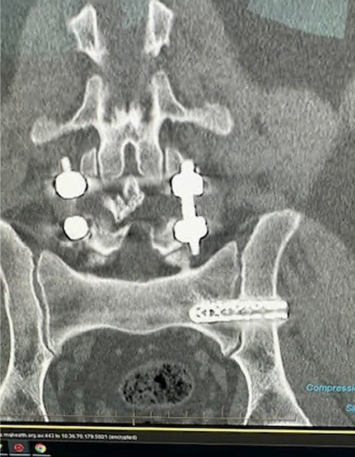
Post-fusion CT image from Case 3 showing sacroiliac region instrumentation

This revision case had already been through multiple pain and nerve-targeted treatments before SIJ fusion was considered.

  • Left cluneal nerve stimulator.
  • Left cluneal nerve radiofrequency ablations.
  • Repeat SIJ injection produced a good short-term result, but repeat SIJ radiofrequency ablation did not help.

Case 3 Revision Strategy.

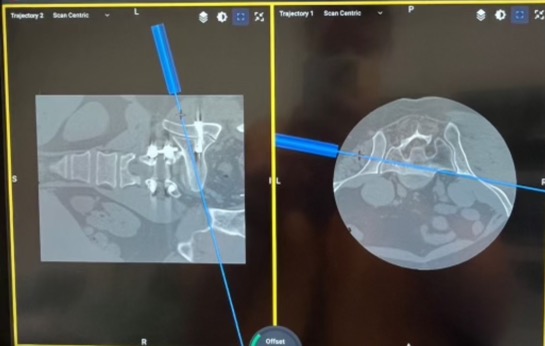
Robotic planning image for revision SIJ surgery in Case 3

The revision surgery plan combined robotic guidance with endoscopic decortication to address a difficult, previously treated problem.

  • Revision decisions may involve removal, augmentation, or a new fixation strategy.
  • Prior procedures can blur the pain picture and make the pathway less straightforward.
  • This is an example of how persistent SIJ pain may still remain the main driver after other interventions have been tried.

Case 4.

Radiograph from Case 4 showing hypermobility-related spinal issues

A 21-year-old active gymnast with several years of back pain also had severe SIJ tenderness and a Beighton score of 8/9.

  • She had a history of T11/12 fusion with concern for ligamentous injury.
  • Hypermobility made the instability picture more complex.
  • This case shows how younger patients can still have major SIJ-related symptoms.

Case 4 Treatment Path.

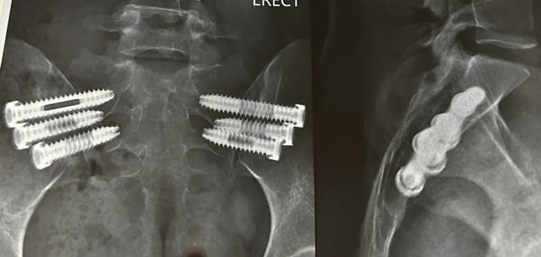
Post-treatment imaging for Case 4 showing sacroiliac fixation

The treatment journey included multiple attempts to stabilise pain and function before definitive progression.

  • Initial revision of screws and lateral interbody fusion.
  • SIJ injections and PRP injections.
  • Trial of spinal cord stimulation.
  • After all of this failed treatment, she underwent robotic sacroiliac joint fusion with good improvement in pain and returned to reasonable, normal activities of daily life.

Case 5.

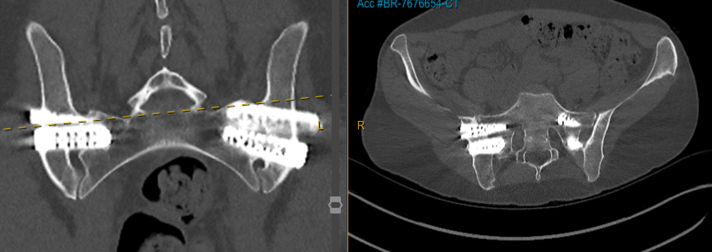
Case 5 CT image showing sacroiliac fixation in a patient with hypermobile EDS

A 38-year-old psychologist with hypermobile EDS reported severe back pain and instability over several years.

  • Prolotherapy gave only short-term improvement.
  • MRI of the lumbar spine appeared essentially normal.
  • This case reinforces that major SIJ symptoms can exist despite relatively unremarkable lumbar imaging.

What These Cases Show

Why SIJ diagnosis needs context.

Across these cases, the pain source was clarified by combining the clinical story with targeted testing instead of relying on one scan alone.

  • Older degenerative cases and younger hypermobile cases can both point strongly toward the SIJ.
  • Prior lumbar fusion can shift force and create diagnostic confusion later on.
  • Short-term relief after SIJ injection can still be clinically meaningful.
  • Normal or limited lumbar imaging does not rule out important SIJ dysfunction.